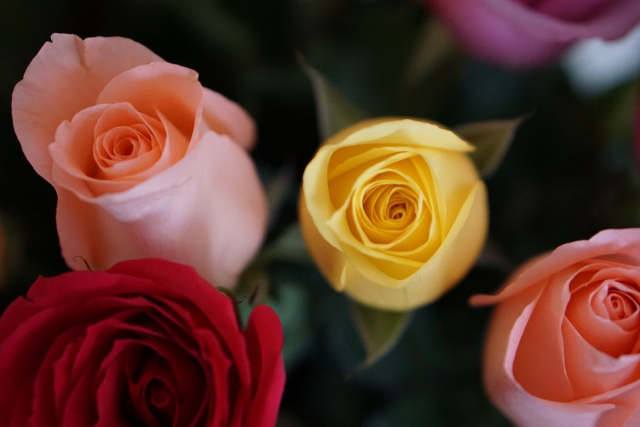
Roses are, without a doubt, the world’s favourite flower, and it’s easy to see why. But if you’ve ever tried to pick “just a rose” for a fresh bouquet delivery, you’ve probably realised pretty quickly that there’s no such thing as just a rose. With over 300 species and thousands upon thousands of cultivated varieties, the rose family is huge, and each type comes with its own personality, bloom pattern, and backstory.
While this can be quite intimidating, you don’t need a horticulture degree to make sense of it all. Rose experts generally sort roses into three broad categories: Wild (or Species) Roses, Old Garden Roses, and Modern Roses. So, once you understand how these three groups differ, choosing the right rose for a gift, a garden, or a special occasion becomes a whole lot easier. Without further ado, let’s get into it.
The Three Main Rose Families, Explained
Roses are primarily grouped by their breeding history, and the dividing line that horticulturists use is the year 1867. This was the year the first hybrid tea rose, “La France,” was introduced in France. Any rose class that existed before that point is considered an Old Garden Rose, while anything bred afterwards falls under Modern Roses. Wild Roses sit outside this timeline altogether, as they occur naturally rather than being cultivated by breeders.
It’s worth noting that these categories aren’t entirely separate from one another. Many Modern Roses actually have Old Garden Roses somewhere in their family tree, and Old Garden Roses themselves trace back to Wild Roses. Thus, it’s best to think of it less as three isolated boxes and more as a family tree that’s been growing and branching out for centuries. With that in mind, let’s look at each group a little more closely, starting with the old-timers.
What are Old Garden Roses?
If you’ve ever caught a whiff of a rose so fragrant it stopped you in your tracks, there’s a good chance it was an Old Garden Rose. Also known as antique or heritage roses, these are the classes that were around before 1867, and they’re prized for their rich scent, densely petalled blooms, and old-world charm.
The catch (and it’s a big one for anyone hoping to have roses on hand all year round) is that most Old Garden Roses only bloom once a year, typically in early summer. That single, glorious moment is precisely what makes them feel so special and, frankly, a bit exclusive. You can’t just pop into a shop and expect a fresh batch whenever you fancy them, which naturally adds to their appeal for milestone occasions. On the upside, what they lack in bloom frequency, they more than make up for in resilience: Old Garden Roses tend to be remarkably hardy, disease-resistant, and able to shrug off cold weather better than most of their modern cousins.
A Few Old Garden Rose Varieties Worth Knowing
There are several classes under the Old Garden Rose umbrella, and these are a handful of the most popular types:
- Damask Roses – Famous for their intensely sweet fragrance, Damask roses are actually the variety most commonly used in perfumery. If a scent has ever been described as “rose”, chances are a Damask had something to do with it.
- Gallica Roses – One of the oldest rose classes still around, Gallicas are known for their deep pink to purplish-red blooms and compact, hardy growth.
- Bourbon Roses – A slightly more generous bloomer than most Old Garden Roses, Bourbons occasionally offer a second flush of flowers later in the season, combining old-world fragrance with a touch more reliability.
- China Roses – These introduced a wider colour range and repeat-flowering traits into the rose world, and later became key players in breeding the first Modern Roses.
What are Modern Roses?
Chances are, when you picture a rose like the kind you’d see in a bouquet, a garden centre, or a Valentine’s Day display, you’re imagining a Modern Rose. Bred after 1867, Modern Roses were developed with one clear goal in mind: to bloom again and again throughout the season rather than just once. That continuous flowering, paired with larger blooms and a much wider colour palette, is exactly why they’ve become the go-to choice for florists and home gardeners alike.
Of course, nothing comes without a trade-off. Modern Roses generally don’t carry the same powerful fragrance as their Old Garden ancestors, and they tend to be a little less hardy and disease-resistant. But for sheer practicality — reliable blooms, longer vase life, and availability pretty much year-round — it’s hard to beat them, which is exactly why they dominate the flower industry today.
Popular Modern Rose Varieties to Look Out For
Modern Roses branch out into several well-loved types, each suited to slightly different uses:
- Hybrid Tea Roses – The classic rose silhouette: one elegant, high-centred bloom perched on a long, upright stem. If you’ve ever received a single long-stemmed rose, it was very likely a Hybrid Tea.
- Floribunda Roses – Instead of one bloom per stem, Floribundas produce generous clusters of flowers, making them a favourite for bouquets that need a fuller, more abundant look.
- Grandiflora Roses – Essentially the best of both worlds, Grandifloras were created by crossing Hybrid Teas with Floribundas, giving you the elegant bloom shape of a Hybrid Tea with the clustering habit of a Floribunda.
- Climbing Roses – These have long, flexible canes that can be trained along fences, trellises, and archways, making them a stunning choice for garden landscaping rather than cut arrangements.
- English (David Austin) Roses – A more recent addition, English Roses were deliberately bred to combine the old-fashioned, cabbage-like fullness and fragrance of Old Garden Roses with the repeat-blooming reliability of Modern Roses. They’re a lovely middle ground if you want the best of both categories.
A Quick Word on Wild Roses
Before we move on, it’s worth a quick shout-out to Wild Roses, sometimes called Species Roses. Unlike Old Garden and Modern Roses, Wild Roses occur naturally and haven’t been cross-bred or cultivated at all, which means they are technically the ancestors of every other rose on this list.
You can usually spot a Wild Rose by its simplicity: a single bloom with just five petals, and almost always in a soft pink shade. Red, white, or yellow Wild Roses do exist, but they’re genuinely rare finds. After blooming, Wild Roses produce rose hips or the colourful little fruits that follow the flower and are often used in teas and natural remedies. While you won’t typically find Wild Roses in a bouquet, they’re a lovely reminder of where every rose on this list ultimately came from.
Old Garden Roses vs Modern Roses: Which Should You Choose?
So, now for the big question: when it actually comes down to choosing between an Old Garden Rose and a Modern Rose, which one should you go for? Honestly, it comes down to what you value most, whether it’s rarity and fragrance, or reliability and availability.
If you’re after something with a story, an intoxicating scent, and a touch of exclusivity, an Old Garden Rose is hard to beat. Their once-a-year blooming schedule means they genuinely feel special when you do get your hands on them, making them a wonderful choice for milestone occasions like anniversaries or heirloom-style weddings. Just bear in mind that their limited blooming window can make them trickier to source on demand.
If instead you need something dependable, such as flowers that look fantastic, last well in a vase, and can be ordered pretty much whenever you like, a Modern Rose is almost certainly your best bet. Their continuous blooming cycle and longer vase life make them the practical, crowd-pleasing choice for everyday bouquets, celebrations, and gifts that can’t wait for a particular season.
Here’s a quick side-by-side to make the choice even easier:
| Factor | Old Garden Roses | Modern Roses |
| Blooming frequency | Once a year (rarer) | Continuous, throughout the season |
| Fragrance | Strong and distinctive | Often mild or absent |
| Vase life | Shorter | Longer |
| Hardiness and disease resistance | High | Comparatively lower |
| Best suited for | Sentimental gifts, weddings, special occasions | Everyday bouquets, year-round delivery |
Every Rose Tells a Different Story
At the end of the day, there’s no “better” category of rose, only the one that’s better suited to what you’re after. Old Garden Roses bring history, fragrance, and a sense of occasion. Modern Roses bring reliability, colour, and blooms you can count on whenever you need them. And Wild Roses remind us where it all began in the first place.
Whichever type catches your eye, we’d love to help you find the perfect roses for your next bouquet, garden, or gift. Contact us today and let’s find the roses that are exactly right for you.
Frequently Asked Questions
1. What’s the main difference between Old Garden Roses and Modern Roses?
The biggest difference is blooming frequency: Old Garden Roses generally flower just once a year, while Modern Roses bloom continuously throughout the growing season. Old Garden Roses also tend to be more fragrant, while Modern Roses usually offer larger blooms and a longer vase life.
2. Why do Old Garden Roses only bloom once a year?
It comes down to their genetics. Old Garden Roses were bred before 1867, long before growers developed repeat-flowering traits into rose varieties. Their single annual bloom is simply part of their natural growth cycle, which also happens to be part of what makes them feel rarer and more special.
3. Are Modern Roses less fragrant than Old Garden Roses?
Generally, yes. Breeders have historically prioritised traits like bloom size, colour range, and repeat flowering in Modern Roses, and fragrance has often taken a back seat as a result. That said, some Modern varieties, particularly English Roses, have been bred specifically to bring fragrance back into the mix.
4. What are Wild Roses used for if they’re not typically sold as bouquets?
Wild Roses are mostly valued for their natural beauty in gardens and landscaping, as well as their rose hips, which are often used in teas, jams, and natural remedies. They’re also historically significant, as every cultivated rose variety ultimately descends from them.
5. Which type of rose is best for a wedding or anniversary?
It depends on the mood you’re after. Old Garden Roses, such as Damask or Bourbon varieties, suit occasions where fragrance and old-world romance are the priority. Modern Roses, particularly English or Hybrid Tea varieties, work beautifully when you want reliable availability alongside striking colour and form.
6. Can I order Old Garden Roses year-round?
Not usually, since most Old Garden Roses only bloom once a year during a specific season. If you have your heart set on a particular Old Garden variety, it’s best to plan ahead and check availability in advance rather than expecting it on short notice.