
You bring a beautiful bouquet home, set it on the dining table, and by day three the petals are already drooping. If that sounds familiar, you are not doing anything wrong. Cut flowers are living things on borrowed time, and in Singapore’s heat and humidity, they can fade faster than the care instructions on a florist’s card ever seem to promise.
The good news is that a few small habits can add real days to a bouquet’s life. Knowing how to make flowers last longer is less about any single trick and more about understanding what a stem needs once it has been cut away from its roots: clean water, a fresh wound to drink through, and a spot that does not work against it. None of this requires special equipment or a green thumb, just a little consistency, and most of it takes only a few extra minutes once it becomes routine.
Why Cut Flowers Fade Faster Here
A stem loses its root system the moment it is cut, so everything it needs now has to come through the base of that stem. In a cool, temperate climate, that process is slow and forgiving. In Singapore, warmth speeds up a flower’s metabolism, encourages bacteria to multiply in the vase water, and pulls moisture out of petals faster than the stem can replace it. Year-round temperatures well above what most cut flowers evolved for, combined with humidity that swings sharply between an air-conditioned room and the corridor outside, put extra strain on a bouquet before it has even had a chance to settle in. None of that means bouquets here are doomed to wilt early. It just means the basics of flower care carry more weight, and skipping them shows up sooner than it might in a cooler country.
Give Your Bouquet a Head Start
A bouquet’s countdown starts the moment it is cut, not the moment it reaches you, which is why freshness at the point of purchase makes such a difference to how long it lasts in your home. Blooms sourced and delivered on the day they are ordered have simply used up less of their natural lifespan sitting in transit or storage before the care routine below even begins.
That is not a guarantee of any particular number of days, since so much depends on the variety, the weather that week, and how the bouquet is looked after once it arrives. It does mean that a fresher starting point gives every other step in this guide more to work with.
The First Cut Counts
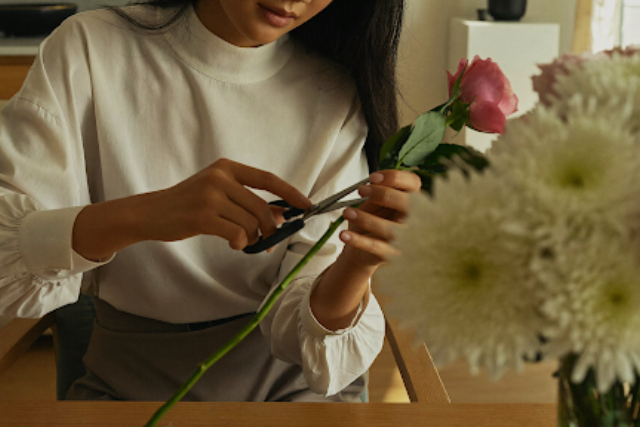
Before a flower ever reaches a vase, how it is cut determines a lot about how long it will hold up. A stem that is crushed or cut with blunt scissors seals itself shut almost immediately, which blocks water uptake before the flower has had a chance to drink. A clean, angled cut with a sharp knife or florist’s shears keeps the water-carrying tissue open and gives the stem a larger surface area to absorb through.
It helps to trim a little off the bottom of each stem when you first unwrap a bouquet, and again every few days as the water is changed. Standard florist practice is to re-cut stems every two to four days and remove any foliage that would otherwise sit below the waterline, since submerged leaves break down quickly and cloud the water with bacteria. For roses in particular, a short vertical cut through the base of the woody stem, in addition to the angled cut, opens up more surface for water to travel through.
Flowers that arrive looking a little tired, especially after a warm delivery, often perk back up once they have had a proper drink. Standing freshly cut stems in a bucket of cool water for a couple of hours before arranging them, somewhere out of direct sun, gives them a chance to rehydrate before they go on display.
Water, Food, and a Simple Routine
Flower food is not a marketing add-on. It typically contains sugar to feed the flower, an acidifier to help the stem draw water up more efficiently, and an antibacterial agent to keep the vase water from turning cloudy and foul. If your bouquet came with a sachet, use it according to the instructions instead of guessing at the ratio.
Beyond that, a short routine covers most of what a bouquet needs day to day.
- Use a clean vase, since residue from a previous arrangement can harbour bacteria that shorten a fresh bouquet’s life.
- Change the water every two to three days, even if it still looks clear.
- Re-cut the stems each time you change the water, taking off about a centimetre or two.
- Keep the vase topped up, since flowers can drink more water than you might expect in a warm room.
- Remove any flower or leaf that starts to wilt or brown, so it does not speed up decay in the rest of the bunch.
None of these steps takes more than a few minutes, and together they often do more for how long a bouquet lasts than the variety of flower itself.
Finding the Right Spot
Where a bouquet sits can be almost as important as how it is watered. Direct sunlight and heat from a window ledge will dry petals out and shorten their life considerably, while a spot too close to an air-conditioning vent can do the opposite, chilling and stressing tropical blooms unevenly. A cool, shaded corner of a living room or office reception, away from both extremes, tends to give a bouquet the steadiest conditions. Arrangements are also best kept away from bowls of ripe fruit, since fruit releases ethylene gas as it ripens, which speeds up flowers ageing and dropping their petals.
Singapore’s housing throws up a few particular quirks to plan around. A high-floor HDB living room can turn into a suntrap by mid-afternoon, while a condo balcony that looks like the obvious spot for a vase is often the warmest corner in the home. Office receptions tend to have the opposite problem, with strong aircon and glass frontage creating cold draughts near the entrance. In both cases, a spot a few steps back from the window or vent, with steady indirect light, usually works best.
Choosing Flowers Built to Last
Some flowers are simply hardier than others, and knowing a little about what you are buying can set expectations before the bouquet even leaves the florist. Chrysanthemums, carnations and alstroemeria are known for holding up well over a week or more, while delicate blooms like tulips and ranunculus tend to be shorter-lived, prized more for their form than their staying power. Sunflowers sit closer to the hardy end too, with sturdy stems and thick petals that tend to shrug off a warm room better than most, which is part of why they turn up so often in bouquets meant to be given as a lasting gift, not just admired for a day.
Roses sit somewhere in between, and the variety makes a real difference. A quick guide to every rose variety shows that sturdier types such as spray roses and garden roses, with their fuller petal structure, often outlast the more delicate hybrid tea varieties in a warm room, even though all roses benefit from the same conditioning steps described above.
For anyone choosing mainly with longevity in mind, sticking to hardier varieties and following the basic care routine above gives the best odds. A bouquet built around chrysanthemums, alstroemeria or sturdier rose types, tended to consistently, can hold its shape and colour for well over a week, which is usually enough for the occasion it was bought to mark.
When a Bouquet Is on Its Way Out
Even with the best care, cut flowers have a natural lifespan, and there comes a point where trimming and fresh water will not bring a bouquet back. Petals that have gone papery and translucent, stems that feel slimy near the base, or water that clouds within a day of changing are all signs that the arrangement is nearing the end. A faint sour smell from the vase is usually the clearest signal of all, since it means bacteria has taken hold faster than the stems can be refreshed.
At that stage, pulling out whichever blooms are still holding their colour and shape, instead of discarding the whole bunch, is usually the better move. A smaller posy of the survivors, freshly trimmed and placed in clean water, can buy a few more days of enjoyment from flowers that would otherwise be thrown out together.
Frequently Asked Questions
How long should fresh flowers last in a Singapore home?
It depends on the variety and how they are cared for, but a well-conditioned bouquet kept away from heat and direct sun typically lasts a week or so, with hardier flowers often going longer.
Do I really need to change the water that often?
Yes. Even water that still looks clean can be building up bacteria that clog the stems and shorten a bouquet’s life, so changing it every two to three days makes a noticeable difference.
Is tap water safe to use for cut flowers?
Ordinary tap water is fine for most bouquets in Singapore. If your flower food sachet gives specific mixing instructions, follow those instead of adjusting the ratio yourself.
Should I mist my flowers to keep them fresh?
Misting can help petals look plump in humid weather, but it is no substitute for clean water and regular trimming, and damp petals left sitting in a warm room can actually encourage mould instead of keeping the bouquet fresher.
Can air conditioning damage cut flowers?
A cool room generally helps flowers last longer, but placing a vase directly in the airflow of an air-conditioning unit can dry out or chill blooms unevenly, so a few feet of distance from the vent or fan is a better choice than positioning it directly underneath.
Why do some bouquets wilt faster than others even with the same care?
Different flowers simply have different natural lifespans. A bouquet mixing delicate blooms with hardier ones will often show its first signs of fading in the more delicate varieties, even when every stem has been cared for identically.
Getting the Small Things Right
Making a bouquet last is rarely about one big decision and much more about a handful of small habits repeated consistently: a clean cut, fresh water, and a sensible spot to sit in. Get those right, and even Singapore’s warmth does not have to cut a bouquet’s life short. A little attention over the course of a week is usually all it takes to keep those blooms looking like the day they arrived for as long as possible. If you would like help choosing an arrangement suited to how long you need it to last, feel free to get in touch with our team at Bouquet.sg.