
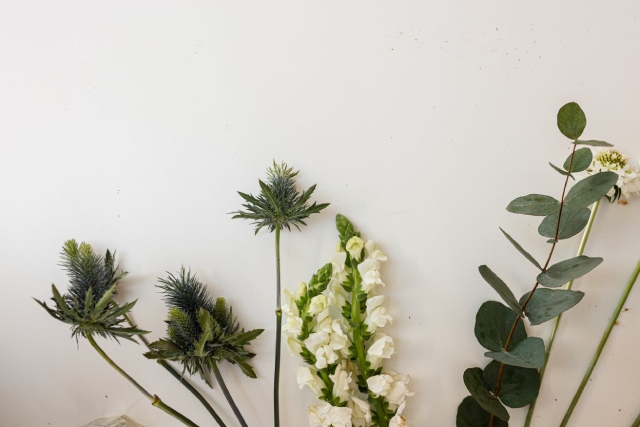
When most of us picture a gorgeous bouquet, we think of the showstoppers like the roses, the peonies, the tulips. But ask any florist what actually pulls an arrangement together, and they’ll point to the bits growing in between: the leaves, sprigs, and delicate little blooms that rarely get top billing.
Foliage and filler might not be the stars of the show, but they’re the reason the whole bouquet looks effortlessly put together rather than like a fistful of stems shoved in a vase. Thus, in this article, we’re diving into why greenery matters so much, the varieties you’ll spot most often, and a few handy tips for anyone keen to try their hand at a DIY arrangement.
Why Is Greenery Important in a Flower Arrangement?
Greenery isn’t just there to pad things out. It gives your flowers structure, frames them beautifully, and adds that lush, professional finish that makes people stop and say “wow.” In fact, most florists will use greenery for roughly a quarter of any given arrangement, and it’s not because it’s cheaper than flowers (though it often is), but because it genuinely makes the blooms look their best.
A good way to think of foliage is that it serves as the stage and the flowers are the performers that stand upon it. Without a proper backdrop, even the most stunning bloom can look a bit lost or unfinished. Greenery gives arrangements their shape and holds everything together visually, especially in bigger designs or when you’re working with heavier blooms like peonies or dahlias, which genuinely need something sturdy underneath to keep their form.
There’s also a practical side to it. Green is essentially the neutral colour of the floral world and it effectively separates your flowers so each one gets its moment to shine, rather than blurring into one indistinct blob of colour. What’s more, it’s not purely aesthetic, either: the right foliage helps your arrangement last longer by supporting moisture balance, and some greenery varieties will happily outlive the flowers themselves by a week or two, so you’re not throwing the whole thing out the moment one bloom starts to wilt.
One last thing worth knowing is that the amount of greenery you use actually shapes the overall vibe. A bouquet with minimal foliage tends to feel more formal and flower-focused, almost gallery-like. Lean more heavily into the greens, though, and you get something softer, wilder, and more relaxed — think garden-style rather than tightly styled. Neither is “better”; it just depends on the look you’re going for.
What Are the Most Common Types of Greenery Used in Bouquets?
If you’ve ever wondered what that lovely dusty-green sprig in your bouquet actually is, chances are it’s eucalyptus, ruscus, or fern. These three show up again and again in florist designs, alongside a handful of delicate filler flowers like baby’s breath and wax flower.
It helps to categorise greenery in two broad camps: structural foliage, which builds the shape and backbone of an arrangement, and filler flowers, which are the small, textured blooms that soften everything and fill in the gaps.
On the structural side, eucalyptus is probably the most popular choice and it comes in a few different forms. Seeded eucalyptus has a soft, dusty blue-green colour with tiny seed pods dotted along the stem, and it’s brilliant for adding a bit of drape or movement. Silver dollar eucalyptus, meanwhile, has rounder, more delicate leaves and a lovely airy, minty tone that suits pretty much any colour palette.
Then there’s ruscus, with both the Italian and Israeli varieties being firm favourites thanks to their glossy, deep-green leaves and impressive staying power, which is handy if you want your bouquet to look fresh for as long as possible.
Leatherleaf fern is another classic you’ll recognise instantly: it’s the deep green, triangular-shaped foliage that’s been a staple in bouquets for decades, valued for being sturdy, inexpensive, and brilliant at covering up any mechanics hiding underneath (like floral foam or tape).
And if you want something that bulks an arrangement out fast, salal — also known as lemon leaf — has broad, glossy leaves that create a lovely full backdrop, pushing your colourful flowers forward so they get all the attention.
On the filler side, baby’s breath is the one most people know by name — those tiny clusters of white blooms that add an airy, romantic softness to just about anything. Limonium (sometimes called statice) does a similar job but with a slightly papery, textured look that photographs beautifully. Wax flower is another gem, bringing small, delicate blossoms that add detail without overwhelming your main flowers.
Of course, this is only scratching the surface; florists also love working with pittosporum, olive branches, dusty miller, and even tropical monstera leaves depending on the style they’re after. But if you’re just getting familiar with greenery, eucalyptus, ruscus, and a bit of baby’s breath will take you a long way.
How To Use Greenery and Filler in DIY Flower Arrangements
If you’re building your own bouquet from scratch, greenery and filler are what will take it from “nice try” to “did you have this professionally made?” Here are a few simple tips to keep in mind as you go.
1. Start with your greenery. Lay your foliage into the vase or container first to build a base and rough shape. Doing so gives you something to work with before a single flower goes in.
2. Add your focal flowers next. These are your showstoppers, so place them once your greenery framework is sorted, then fill in with smaller filler blooms to tie everything together.
3. Try the “thriller, filler, spiller” method. The thriller is your standout flower, the one that draws the eye and is usually tall or uniquely shaped. The filler is exactly what it sounds like: smaller blooms and foliage that add volume and texture around your thriller. The spiller is anything that trails or cascades over the edge of your container, giving the whole thing a sense of movement rather than looking stiff and boxy.
4. Use a floral grid or foam for support. A floral tape grid or a soaked block of floral foam can be a lifesaver for keeping everything in place while you work. There’s genuinely no need to be precious about getting it perfect since it’ll be hidden once the flowers go in.
5. Mix your textures, not just your colours. Pairing something dense and leafy, like ruscus, with something light and airy, like baby’s breath, creates a lovely sense of depth. The same goes for mixing smooth leaves (hello, eucalyptus) with something feathery, like ferns — it stops the arrangement from feeling flat or one-note.
6. Cut stems at an angle. This gives them more surface area to soak up water, helping your arrangement stay fresher for longer.
7. Strip off any leaves below the waterline. Submerged leaves will rot and cloud the water faster than you’d think, so it’s worth taking the extra minute to remove them.
8. Don’t overthink it. Florists tweak and adjust as they go, stepping back regularly to check the balance from every angle. Your first attempt doesn’t need to be flawless since having a bit of greenery doing the heavy lifting behind the scenes is often enough.
Let Your Bouquets Bloom Brighter
At the end of the day, foliage and filler are what turn a handful of pretty flowers into an arrangement that actually looks designed. They add structure, depth, and that lovely natural finish that makes a bouquet feel full and considered rather than sparse or thrown together. So next time you’re picking up flowers or putting together your own arrangement, give the greenery its due credit since it’s doing far more work than it gets recognised for.
Fancy leaving the leafy details to us instead? Talk to our team today and we’ll craft a bouquet — foliage, filler, and all — that’s ready to brighten someone’s day.
Frequently Asked Questions
1. Is foliage really necessary, or can I just use flowers on their own?
You can absolutely make a flower-only arrangement, and some designers do prefer that clean, flower-focused look. But foliage adds structure, fullness, and a natural frame that helps each bloom stand out, so most bouquets end up looking noticeably fuller and more polished with a bit of greenery mixed in.
2. What’s the difference between greenery and filler flowers?
Greenery generally refers to leaves and non-flowering foliage, like eucalyptus or ruscus, which build structure and shape. Filler flowers are the smaller, more delicate blooms — think baby’s breath or wax flower — that add softness and volume in the gaps between your main flowers.
3. How much greenery should I use in an arrangement?
There’s no strict rule, but a helpful guideline is that greenery often makes up around a quarter of a bouquet. From there, it’s really down to personal taste — less foliage gives a tidier, more formal look, while more creates a softer, wilder, garden-style feel.
4. Does adding greenery help my flowers last longer?
It can. Certain types of foliage help maintain moisture balance within an arrangement, and many greenery varieties last considerably longer than the flowers themselves, so your bouquet can stay looking full even after a few blooms have faded.
5. What’s the easiest greenery for a beginner to work with?
Eucalyptus and ruscus are great starting points. Both are widely available, hold up well once cut, and are forgiving to work with, making them a solid choice if you’re putting together your first DIY arrangement.
6. Do I need floral foam to arrange flowers with greenery at home?
Not necessarily. Floral foam or a taped grid can help keep stems in place, especially in wider vases, but a simple crisscross of greenery stems at the base of a narrower vase can also hold your flowers steady without any extra tools.