
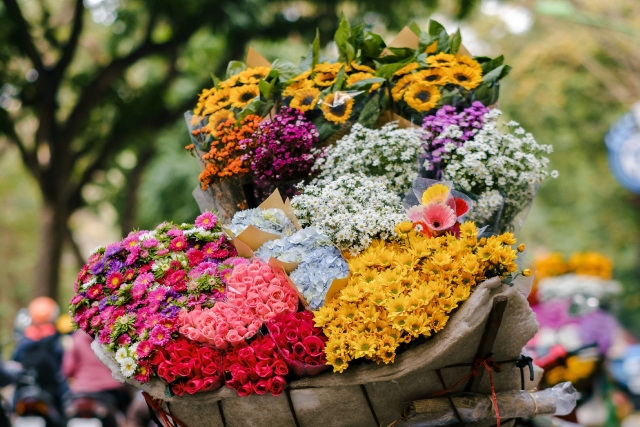
Every flower shop worth its secateurs says the same thing: “farm-fresh,” “picked at peak,” “guaranteed freshness.” It’s on every homepage, every product description, every order confirmation email. The trouble is, none of that actually tells you anything until the box is in your hands (or your inbox, if you’re checking a preview photo first).
The good news is that freshness isn’t a mystery. It leaves clues — in the bud, the petals, the stems, even in a well-lit photo before your order has left the studio. Below is a proper guide to spotting those clues, starting with roses and working outward to the other blooms you’re likely to order.
How Can You Tell If a Rose Is Actually Fresh?
Check four things, roughly in this order: how open the bud is, how firm the head and stem feel, what the petals look like up close, and the state of the leaves and stem-end cut. A genuinely fresh rose is a quarter- to half-open bud with a firm neck (it shouldn’t flop when you tilt it), smooth stems that aren’t slimy, and leaves that are a proper deep green rather than yellowing at the edges.
It sounds obvious once it’s written down, but most people judge a rose purely on how “blooming” it looks, and that’s actually backwards. Florists call the ideal stage the marshmallow stage: the petals have started to unfurl but still have that rounded, slightly springy shape. A rose that’s already wide open, with visible pollen dusting the centre, has done most of its blooming already and won’t have much life left in your vase — maybe a day or two, rather than the five-plus days you’re paying for.
There’s a simple touch test for this too. Gently squeeze the rose where the petals meet the top of the stem. Firm means fresh; soft or spongy means it’s on its way out. You can also hold the bloom just below the head and give it the gentlest wiggle; if it wobbles or droops, the stem’s vascular system has already given up, and that’s not something a fresh vase of water will fix.
Finally, glance at the cut end of the stem if you can see it. It should look clean, moist, and slightly angled. A dry, blackened, or slimy stem end is a sign the flower has been sitting around longer than it should have, or wasn’t handled properly before it got to you.
Why Do My Roses Have Green Tips or Slightly Bruised Outer Petals?
Those are guard petals, and they’re actually a good sign rather than a flaw. Roses grow with a tougher outer layer of petals that shields the delicate inner bloom during harvesting, packing, and transit. Some florists trim them off for a neater, more finished look, while others leave them on deliberately because they protect the flower and help it last longer once it’s in your vase.
It’s worth learning to tell the difference between normal guard-petal wear and actual damage. A guard petal might look slightly leathery, a touch green at the base, or have a small mark near the edge. All of these are cosmetic and entirely expected. What you don’t want to see is bruising, browning, or transparency on the inner petals, the ones the guard petals are meant to protect. That’s a genuine sign of ageing or rough handling.
It’s also completely normal for your delivered roses to look a little different from the photo on the website. Flowers are living things and keep developing after they leave the farm, so a rose photographed at the “half-open” stage might arrive looking slightly tighter, or open up further over the next couple of days. That’s not false advertising but simple biology.
What Do Fresh Tulips, Lilies, and Peonies Look Like Compared to Roses?
Every flower has its own little “tell,” but the underlying logic is the same as with roses: firm stems and a bud that hasn’t fully opened yet are almost always good news. Here’s a quick run-through of the blooms you’re most likely to see alongside (or instead of) roses:
- Tulips should have crisp, waxy petals and sturdy, upright stems. A slight upward curve after cutting is normal tulip behaviour, not a sign of decay, so don’t mark them down for it.
- Lilies last longest when the buds are still mostly closed or just beginning to open. Check that the stamens are still coated in pollen — if it’s shedding everywhere, the flower’s further along than you’d like.
- Carnations and chrysanthemums should look full and slightly ruffled, with densely packed petals. On mums specifically, the little centre disc should be tight, not fluffy or falling apart.
- Sunflowers should have a dark, full centre — yellowing or a centre that’s shedding seeds is a sign of age.
- Orchids should feel firm and waxy to the touch, with no soft spots, tears, or blemishes on the petals.
- Peonies are at their best as tight or just-opening buds, almost like little marshmallows themselves. A fully open peony is a beautiful thing, but it also means the clock is already running out.
If you remember nothing else from this section: closed or half-closed beats fully open, and firm beats floppy, no matter which flower you’re looking at.
How Do You Check Flower Freshness From a Pre-Delivery Photo?
Zoom in on three things: how open the buds are, the condition of the petal edges, and the colour of the stems and leaves where they’re visible. You’re essentially running the same checks you’d do in person — you’re just relying on your eyes rather than your fingers.
Bud openness is the easiest thing to judge from a photo, and it’s the same rule as above: you want blooms that still look slightly closed, not fully unfurled. Petal edges are the next thing worth studying — you’re looking for crisp, clean lines rather than any curling, browning, or translucency creeping in from the tips. And if you can see the base of the wrap where the stems and leaves poke out, check that the green looks vivid rather than dull or yellowing.
There are, of course, things a photo genuinely can’t tell you — firmness, fragrance, moisture in the stems. That’s fine, as long as the shop backs its flowers with a proper freshness guarantee, so you’re not just trusting the picture blind. It’s also worth being a little wary of photos that look overly bright, heavily filtered, or oddly staged — if something feels artificially polished, it’s reasonable to ask the shop for a shot in more natural light before it ships.
One more thing worth doing: compare the preview photo to the shop’s own website image. A real, order-specific preview should show natural, minor variation from the marketing shot (that’s expected with a living product) — but if it looks suspiciously identical to a stock photo, that’s worth a second look. And if anything about the preview doesn’t sit right with you, say so straight away. Most shops only have a short window to make swaps before an order is packed and dispatched, so a quick reply can save you a disappointing delivery.
What Are the Warning Signs That Your Delivered Flowers Aren’t Actually Fresh?
Wilting or drooping heads, brown or transparent petal edges, sagging or yellowing leaves, a sour or musty smell, and loose pollen or shedding petals all over the wrapping are the clearest signs that a bouquet was already past its best before it reached you.
A lot of this comes down to something called ethylene gas — a natural hormone that ageing flowers, fruit, and vegetables all give off, which speeds up the ageing process in whatever’s nearby. It’s part of why flowers stored near fruit or kept in a poorly ventilated cooler tend to fade faster than they should. So if your bouquet arrives tired, it’s not your imagination and it’s usually not something you did wrong either.
If your flowers do arrive below standard, photograph them as soon as you notice — ideally still in the original packaging — and get in touch with the shop quickly. Most reputable shops give you a fairly short window, typically 24 to 48 hours, to report an issue. A genuine freshness guarantee will spell out exactly what counts as a valid claim rather than hiding behind vague phrases like “always fresh” with nothing to back it up.
Ready to Order With Confidence?
Freshness doesn’t have to be a leap of faith. No matter if you’re squeezing a bloom in person, zooming in on a preview photo, or reading a shop’s freshness policy before you commit, the same handful of checks will tell you almost everything you need to know. Roses have their own particular tells (hello, marshmallow stage and guard petals), but once you’ve got the hang of them, the same logic carries over to tulips, lilies, peonies, and everything else in the shop.
The real test of any flower shop isn’t the word “fresh” printed somewhere on its homepage but whether the blooms actually hold up to the checklist above, delivery after delivery.
With that said, if you want to know more about how we source and ship our roses, or simply fancy a chat about what’s in season, get in touch with our team — we’re always happy to talk flowers.
Frequently Asked Questions
Is it normal for roses to arrive still closed or only half-open?
Yes, and it’s actually a good sign. Roses delivered at the quarter- to half-open “marshmallow stage” tend to have the longest vase life, opening up gradually over the following days rather than arriving already at their peak.
Can wilted flowers be revived once they’ve arrived?
Sometimes, but not always. Recutting the stems at an angle under running water and placing them straight into fresh water with flower food can help mild wilting caused by dehydration. However, if the stem has already collapsed (a drooping “bobblehead” bloom) or the petals have gone transparent and brown, that damage generally can’t be reversed.
How long should fresh flowers actually last?
It varies by flower type, but a genuinely fresh bouquet from a reputable shop should typically last five to ten days with proper care, sometimes longer for hardier blooms like carnations or chrysanthemums. If your flowers are visibly wilting within a day or two of delivery, that’s worth flagging to the shop.
Why do my flowers look slightly different from the photo I ordered from?
Flowers are a natural, living product, so a small amount of variation is completely normal — seasonal availability, natural colour differences, and the fact that blooms keep developing after they’re cut can all mean your bouquet looks a touch different from the listing photo. A significant difference in fullness, size, or overall design, though, is worth raising with the shop.
What should I do if my flowers arrive damaged or already wilting?
Take clear photos as soon as you notice the issue, ideally before removing any packaging, and contact the shop promptly. Most reputable florists have a reporting window of 24 to 48 hours and a defined freshness guarantee that outlines what qualifies for a replacement or refund.
Does a pre-delivery preview photo guarantee the flowers will be fresh?
Not entirely — a photo can’t show you firmness, fragrance, or moisture, only what the bouquet looks like at that moment. It’s a genuinely useful extra check, but it works best alongside a proper freshness guarantee rather than as a replacement for one.